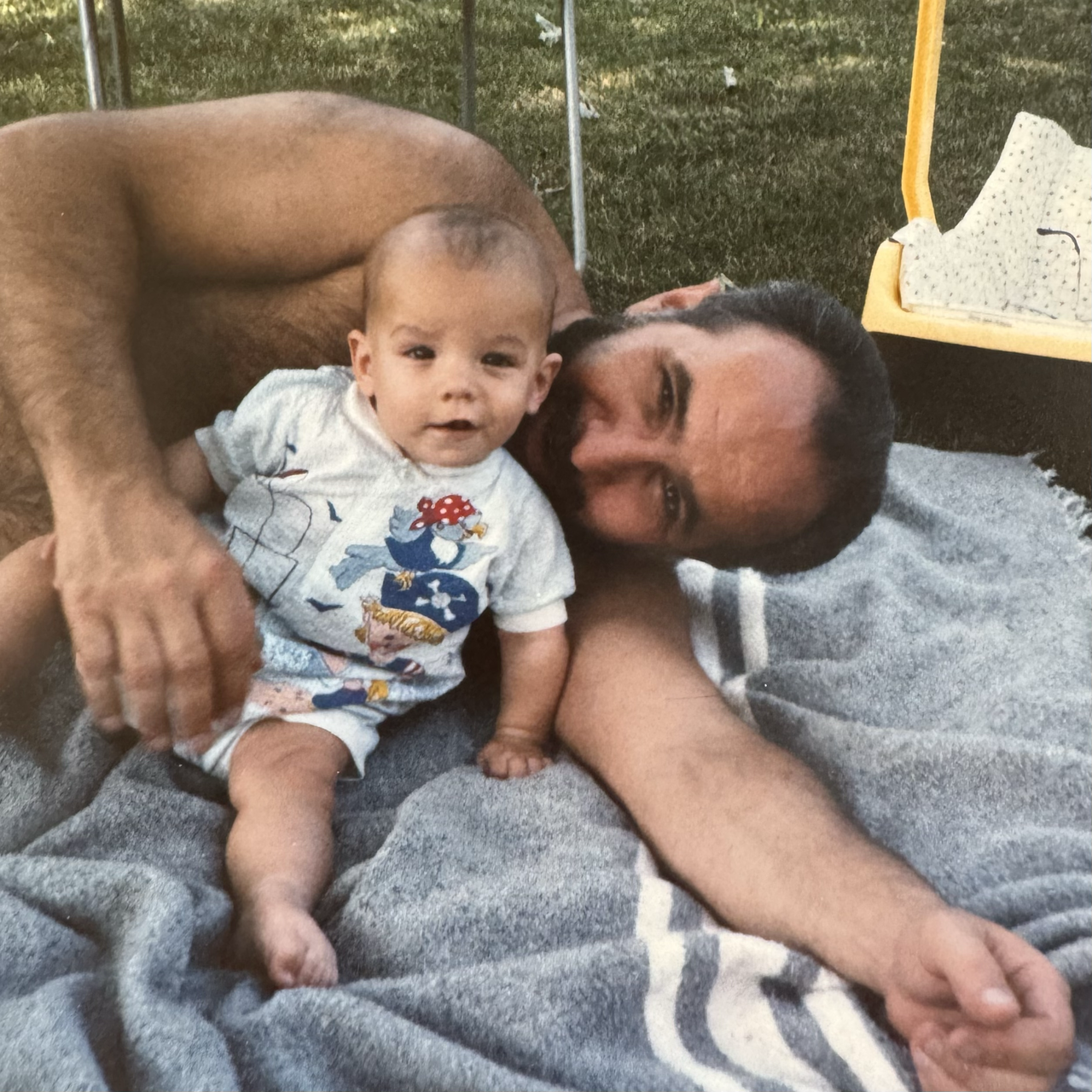
I'm gonna write about the death of my dad a bit. I'd already said a few words at his wake, but I thought it'd be nice to record some of those thoughts in a more permanent way.
He and I always had a complicated relationship: I'd see so many tendencies within him that I'd had to either fight back, restrain, or modulate in some way for myself, and I couldn't help but feel that his life served mostly as a cautionary tale for me. Nevertheless, it is humbling to reflect on just how much I owe to him.
The memories I highlight of my father all share a common theme: fun. So many events in my life were brightened by my dad's sense of joy and exploration: he made music fun; he made learning about the world fun; he made childhood fun. These recollections serve as just a few examples.
My dad made music fun
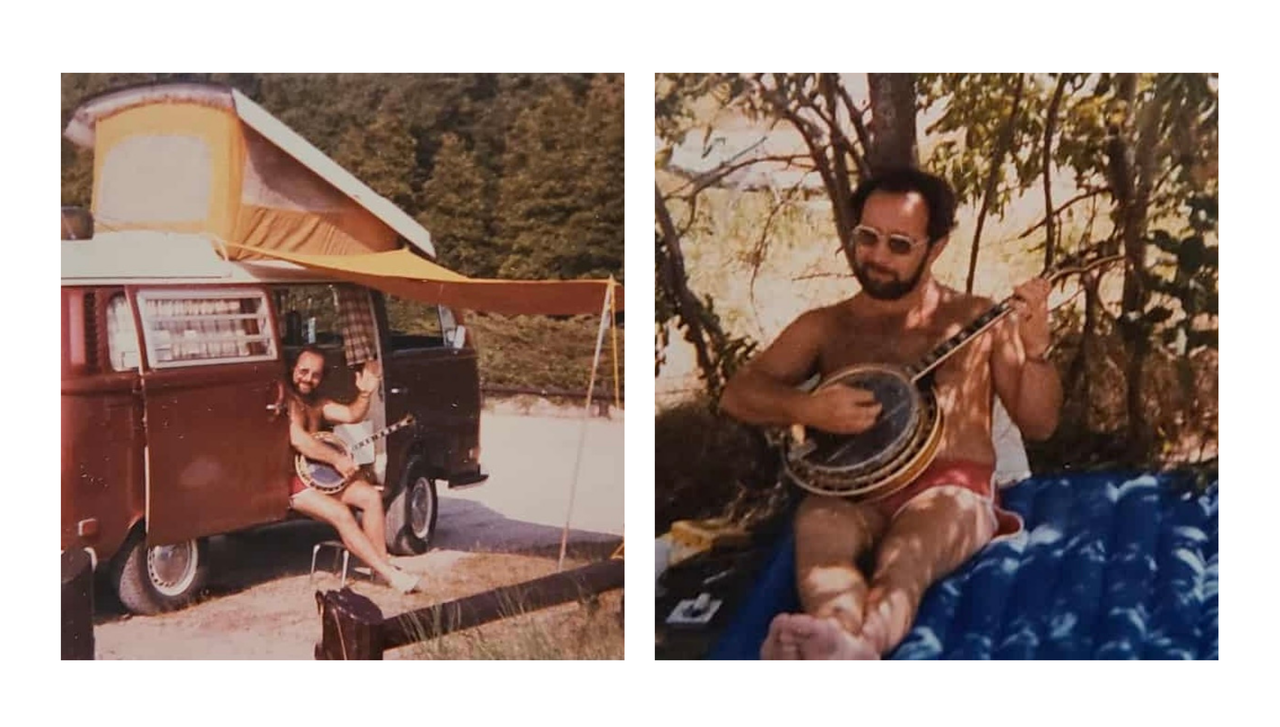
From a very young age, I remember sitting on his lap and picking at the banjo he was holding, or reaching to grab it while he was playing. I have very vivid memories of the instrument and its contours, and must've spent a significant amount of time mesmerized by it. Now having young kids of my own, I can only imagine how challenging it must have been for him to practice with me and my two siblings around. Nevertheless, I'm left with overwhelmingly positive and fun memories of seeing him play as a young child.
He also made playing the piano fun: my grandmother taught all three of us to play piano, starting from age five and continuing on until high school. Although we've all benefitted greatly from learning to read and play classical music, the diligence required to survive the weekly lessons didn't exactly lend itself well to finding enjoyment in music. In fact, the latter became synonymous with the thing you'd do on an instrument when you weren't doing what you ought to be doing (namely, learning the RCM Grade N piece-of-the-month), and we'd regularly hear a call from the other room if we were "noodling", rather than remaining focused on the task at hand. Nevertheless, our father taught us the basics of the blues scale through a simple example (which I think was inspired by a song from the Ghostbusters soundtrack called Cleanin' Up The Town), and for a time, there was no way to stop me and my brother from playing what my grandmother would derisively refer to as "Boogie-Woogie" on the piano in her basement.
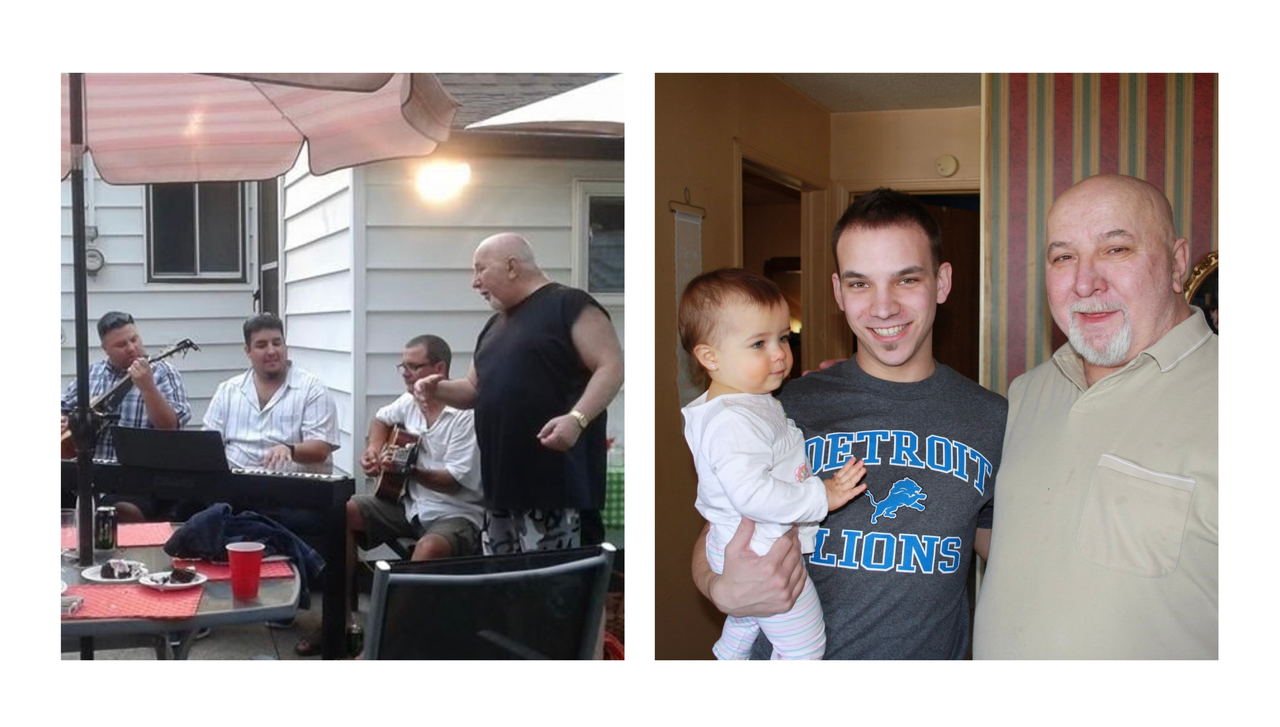
My dad also had a way of being very enthusiastic in encouraging us to perform. He'd often insist that we bring our instruments with us whenever we'd go to family events with him, and would make a point to ensure that everyone would see us play. (To this day, opinions amongst my siblings are mixed as to whether or not this was an enjoyable part of our childhood...) Although I remember feeling very shy in these situations, I look back on them fondly: often, it becomes the responsibility of the musician to be an internal locus of positive energy, in cases when they are entertaining to a small crowd, and/or when the audience is only mildly willing to endure what they perceive as a sonic onslaught. In those cases, it only takes one or two gestures of encouragement from an audience — sometimes as little as the tapping of toes, bobbing of the head, or an interested glance away from an in-depth conversation — to alleviate the burden on the performer. I believe that my father understood this deeply, and was generous in his outpouring of support towards us when it came to performing. He'd even make a point of coming to many of our Windsor Strings concerts as kids, even though he had little personal interest in classical music. (He'd often sit in the back of Assumption Chapel, where he felt more comfortable, usually with his arm draped over the empty chair beside him.) As recently as his eightieth birthday in July, he was listening intently and encouraging me as I performed to a small group of family in his backyard, a tradition he'd kept alive at family gatherings years before.
My dad made learning about the world fun
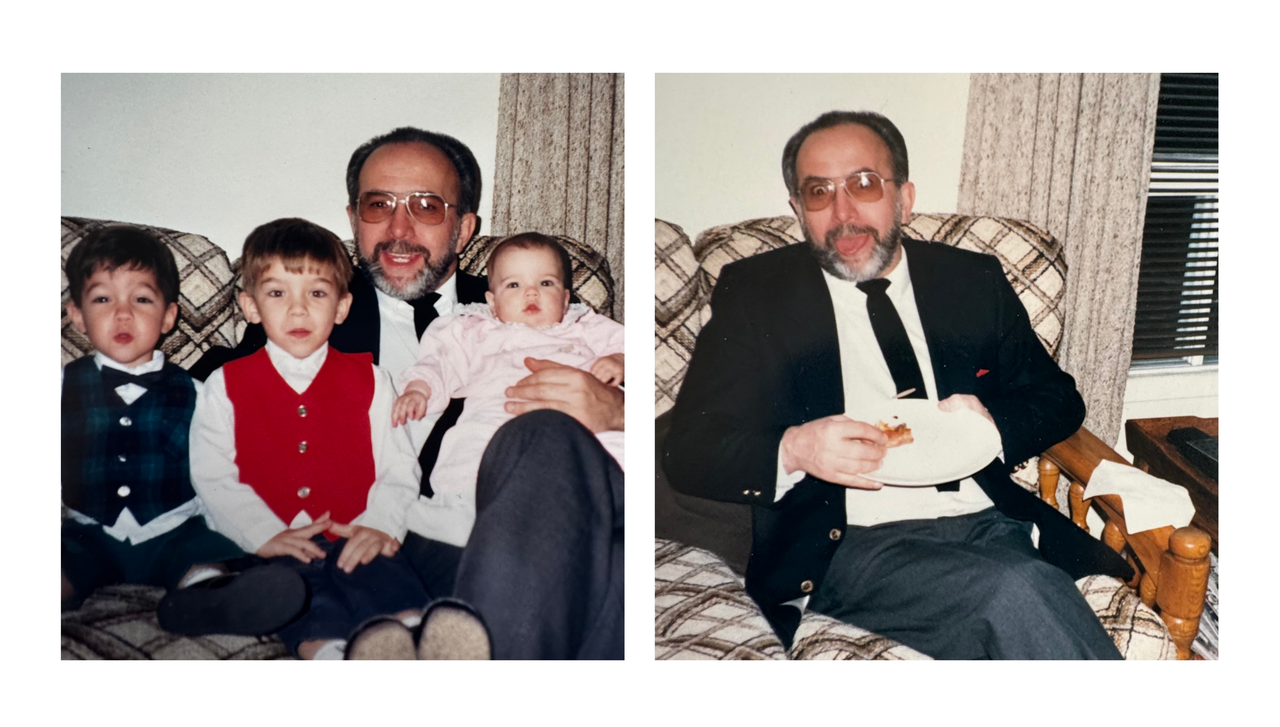
In one's youth, there is often so much to learn about the world. Numbers, words, music notes, flash cards, trivia; the list goes on. I lacked no encouragement from family when it came to learning, and there were many opportunities to grow in this regard. But my father was very good at making this process enjoyable, and would often turn the task of learning new words in French, or learning to add/multiply, into a game. These games became a big part of our bedtime routine, and they would often feature my dad struggling to get to the answer before us. He did quite a bit to convince us that he was "stupid" back then. Looking back, I now realize he was building up our confidence. But he may have been a little too convincing: for a long time, I maintained that there wasn't much to be learned from my father (but he nevertheless found moments to surprise me, one of which I'll return to later). We would quiz each other often, and these games would often spill over into everyday life whenever there was time to be killed. (To this day, I occasionally use the "Higher/Lower" game with my kids, where one person picks a number between 0-100 and the other has to guess it, being guided by successive replies of the eponymous hints. Unfortunately, having time to kill in an age where endless entertainment is always at one's fingertips is exceedingly rare...)
My father also made learning about the Universe fun. When my parents divorced, many of my dad's old books were left behind on shelves in our basement. Amongst these, I found one provocatively-titled "The God Particle" by Leon Lederman — a Nobel-prize winning physicist — and proceeded to read the first chapters. (Side note: this is also when I first learned of my father's struggles with alcoholism, as his AA book was amongst the first books I found on this boring summer afternoon. Needless to say: I didn't mention this at the wake...but I digress.) I found it to be fully captivating and awe-inspiring, and brought it with me when I next went to his house to visit. He admitted that he'd originally bought this book thinking it was a religious text, and was surprised to find out it was in fact about particle physics. Nevertheless, he and I had a great conversation about what deep mysteries were lying beneath our noses at the shortest distance scales. Later on, I also found a book about black holes by Kip Thorne (who later also won a Nobel prize in 2017 upon the first observation of gravitational waves) and reading this one led to many late night talks about the extreme conditions near the centre of our galaxy, the big bang, and other exotic cosmological phenomena. In each case, I found such great joy in talking with him about these topics. As I grew older, I realized that there was a limit to how much he could teach me about these things. (After all, he had no formal education in these topics, or anything else beyond his high school diploma.) But he kindled an early spark of interest for me in a way that only someone with a child-like sense of curiosity could.
Over the course of these conversations, my dad found enjoyment in pronouncing his belief that part of dying was to have the explanations to all of these deep mysteries about the nature of the Universe revealed. As a young, ambitious kid, I took it as a challenge to get to the bottom of at least some of these questions before he did. But now, in his death, I can only hope that he's right. Among the books in the basement were also several by C.S. Lewis, a writer whose beliefs overlapped significantly with dad's. I suspect his desire for a final explanation to all these mysteries might have been inspired by the following passage:
“If we find ourselves with a desire that nothing in this world can satisfy, the most probable explanation is that we were made for another world.”
— C.S. Lewis, Mere Christianity
My dad made childhood fun
Growing up with my dad involved lots of time spent watching and playing sports. He'd often play catch with us in the backyard, or take us across to the grade school across the street, which had yellow squares painted onto its brick wall to serve as a target for him while we were at bat. We'd also occasionally get the chance to stay up late to see the end of a hockey game, as long as we promised to go straight to bed as soon as it was done (and before our mother got home from the concert she'd be playing while he was in charge). Although I never quite figured out how to play sports well with the other kids at school, with him it was always just a relaxing way to pass the time.
We'd also sometimes go out for bike rides, either on our own with him or as a group. I always got a kick out of our group rides because I got to lead the way, while my dad would follow up as the "caboose" in our single-file formation. We once found some dirt bike jumps out in the forest and had so much fun jumping our bikes over the small pits in between each hill.
As a child, the experience of hearing a thunderstorm — especially during the night — can be particularly frightening. But, no matter the time, if we were either awakened or kept awake by a storm, my father would take the occasion to bring us out onto the porch to watch the "show" and, suddenly, the mood would shift from fear to excitement. He'd even talk about it with anticipation if he could tell there was a storm coming, or if he'd seen one in the forecast. Thinking back, it was his infectious sense of awe that would lead us all towards feeling more safe.
In The End
I was with my father in the end. In some ways, I feel grateful to have made it to the age of 39 without having to watch someone die. (As Richard Feynman once noted soon before his own death: "I'd hate to die twice. It's so boring." My experience leads me to believe the same could also be said for observers.)
He and I weren't able to speak very much at the hospital, after things had taken a turn for the worse. And yet, there were moments of joy. The most moving part of that morning for me was seeing the expression of sheer delight on his face, when he looked up and noticed that the woman standing over him at his side wasn’t his nurse, but his daughter (Karen, my sister). And so, it’s my strong belief that he carried this same childlike merriment and fun spirit with him until the very end of his long life.
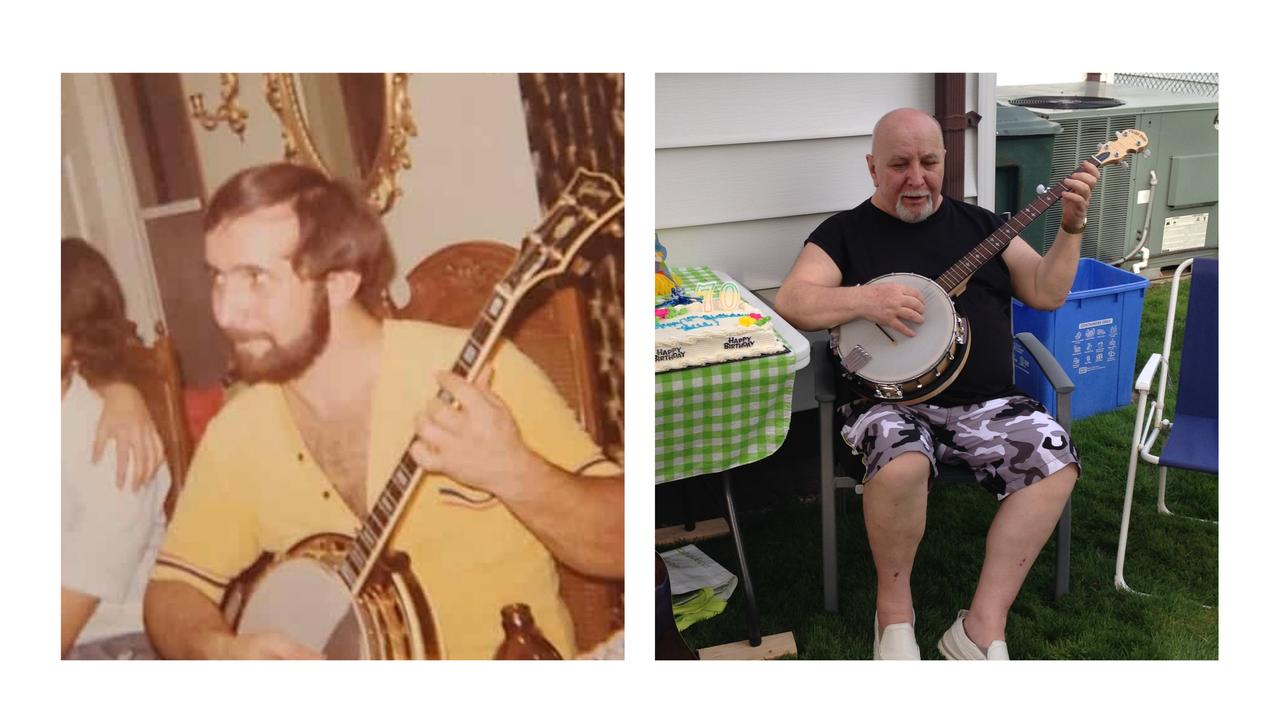
I remember a humbling moment for me: it was toward the end of the pandemic and I'd been struggling a bit in finding direction in my own life and my relationships. I called him to talk, and — after listening for a while — he articulated exactly what I needed to hear in that moment. He told me that so many of his life's problems arose simply as a result of his inability to simply be at peace when alone, by himself. (He'd recently been spending time apart from his wife, Carolyn, while she was living at a long-term care facility.) After spending such a long time avoiding this lesson, he admitted that he'd been at his happiest ever since learning to do that. I came away from that conversation feeling invigorated and inspired to grow (since, after all, even my dad managed to figure out what I'd been failing to appreciate this whole time).
I'll miss my dad deeply. But I also believe it’s important to remain grateful for the good times I had with him and the memories I have the privilege to carry forward in his absence.
Epilogue
If you've made it this far, I'd like to give some additional context about my perspective in preparing this post. I've been recently understanding more and more the importance of giving back and becoming a net source of value to those in my life. When younger, I was much more concerned with ensuring that things be even/fair. The generosity of others towards me always felt like a burden, and the guilt of making someone else potentially feel that way impacted my own generosity as well. Nevertheless, over time (and through many long conversations with loving friends) I've come to better understand my role as a provider — a net source of value to others — in all aspects of my life. In my youth, I benefited greatly from so many people pouring their time and energy into my development; it only makes sense now to put their efforts to good use through my words and actions. And besides: our world is a better place when each person acts from a perspective of growth, rather than one of scarcity.
I say all of this because my recollections of my father are intentionally generous. I won't recount the many times my father fell short of being the person that I would've wanted/needed him to be (although I suppose we all look back on our parents in this way). In his death, I choose to remember those positive things that helped me on my journey.
I love you, dad.